How Two Founders Figured Out Their Pay Without Falling Out
Let’s be honest—talking about money with your co-founder is awkward. Especially if one of you built the tech before the company even existed. Or if one of you is all-in, and the other is juggling side gigs to keep the lights on. How do you make that conversation fair, productive, and not totally soul-destroying?
That’s why I built the Chiron Compensation Canvas.
Why This Tool Exists
In Greek mythology, Chiron was the mentor of heroes. Wise, fair, and a bit of a philosopher. I figured the startup world could use a bit of that energy—especially when it comes to early-stage compensation.
Founders often make handshake agreements around pay and equity that come back to haunt them six months later. What starts as goodwill turns into resentment. Someone’s overworking. Someone’s underpaid. Someone’s secretly furious. No one talks about it.
The Chiron Canvas is designed to fix that—before the fallout.
What It Is
It’s not a calculator. It’s a conversation tool.
It gives founders a scorecard to assess:
Who’s contributing what
Who needs what to survive
How central each person is to the mission
Then, it provides three structured ways to convert that into actual pay and equity decisions. No awkward spreadsheets. No weird power moves.
Just a shared sense of fairness and clarity.
Meet Amira and Tom
Let me show you how it works in practice.
Amira is a full-time technical founder. She built the prototype 12 months before incorporation and has no other income. High commitment. High dependency.
Tom is the commercial co-founder. Ex-Head of Sales. He’s working two days a week while freelancing. High value, but part-time.
Here’s how their scores looked:
| Dimension | Amira | Tom | Weight |
|---|---|---|---|
| Prior IP / Tech | 5 | 1 | 15% |
| Hours Committed | 5 | 2 | 15% |
| Central to Mission | 5 | 4 | 15% |
| Deliverables | 4 | 3 | 10% |
| Opportunity Cost | 3 | 4 | 10% |
| Survivability | 5 | 2 | 15% |
| Availability | 4 | 2 | 10% |
| Culture Contribution | 4 | 3 | 10% |
| Total Score | 4.5 | 2.55 |
What They Did With It
They tried three models:
1. Fixed Salary Banding
Amira: £3,000/month
Tom: £1,500/month
Simple. Predictable. But risky on cash burn.
2. Deferred Pay + Equity
They agreed a £3k market salary each. But the startup could only afford £2,000/month total.
Amira: £1,200 cash + £1,800 deferred → equity at 20% discount
Tom: £800 cash + £700 deferred → same terms
It rewarded commitment without draining the bank.
3. Milestone-Based Pay
Only paid when goals were hit. Like:
MVP completed: £3k to Amira
First customer secured: £2k to Tom
£100k raised: £2k split £1.5k / £0.5k
Product launch: £2.5k to Amira
10+ leads contacted: £1k to Tom
No progress = no pay. Brutally fair.
What They Learned
Fair ≠ equal
Survivability matters more than ego
Talking it through beats guessing and hoping
Most importantly, the process gave them language to disagree without drama. That’s a win in any co-founder relationship.
Download the Canvas
If you're at that delicate early stage and wondering how the hell to set salaries, don’t wing it. Use the canvas.
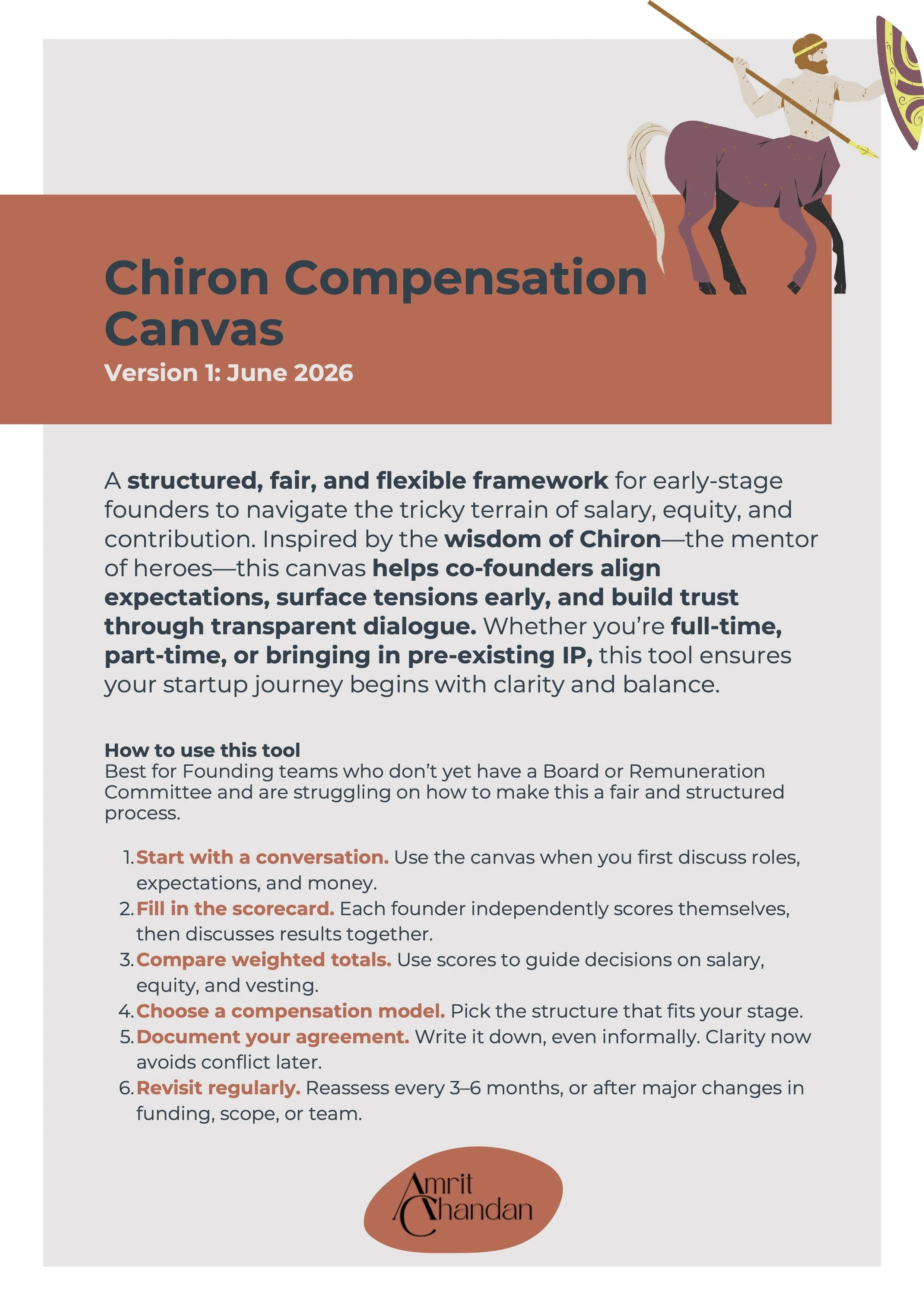
Bring Clarity to the Most Awkward Founder Conversation: Pay
The Chiron Compensation Canvas is a structured, fair, and flexible tool designed for early-stage founders navigating that tricky moment: “How do we pay ourselves?”
Inspired by Chiron—the wise mentor of heroes in Greek mythology—this framework helps co-founders align on salary, equity, and contribution with transparency and trust.
Whether you’re:
Full-time or part-time
Bringing IP into the startup
Pre-revenue or post-funding
…this tool will help you avoid conflict, surface assumptions, and document an agreement you’ll actually want to revisit.
What’s inside:
A weighted scorecard for fair assessment
Four compensation model templates
Prompts to guide honest conversations
A ready-to-complete agreement section
Use it with your co-founders. Share it with your startup mentor. Adjust it as your journey unfolds.
Need more support? Join the community or sign up for Amrit’s newsletter for tools on navigating founder life with clarity and courage.